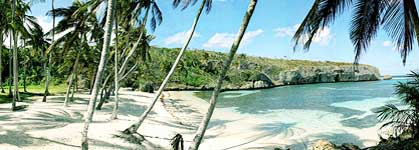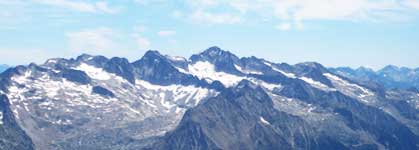
Taking up nearly 80% of the Iberian Peninsula, Spain juts out into the ocean and enjoys over 5,000 miles (8,045 kilometers) of coastline- that's 88% of its boundaries! Ranging from unspoiled coves to tourist-laden golden stretches, Spain's beaches are internationally beloved by sun-bathers, windsurfers, snorkelers and more. In fact, an astounding 480 of Spain's beaches - easily more than any other country - have been tagged with the European Blue Flag distinction.
Run by the independent, non-profit organization FEE (Foundation for Environmental Education), European Blue Flag awards go out to those beaches across Europe, South Africa, Morocco, New Zealand, Canada and the Caribbean that meet a series of strict requirements related to water quality, environmental education and information, environmental management, safety and other services.
Mediterranean Coasts & Beaches
With warm, calm waters and sunshine practically 365 days a year, it's no surprise that Spain's Mediterranean coast is a top destination for beach-goers in search of some fun in the sun. Spain's Mediterranean coast is comprised of 11 individual coasts, from the city of Tarifa and the Costa del Sol (Coast of the Sun) eastward all the way to the Costa Brava (Wild Coast) and the French border.
The 1660-kilometer (1030-mile) Mediterranean stretch is dotted with an eclectic collection of massive tourist resorts, historical cities, quaint fishing villages and more beaches than you can possibly imagine!
Atlantic Coasts & Beaches

Straddling Portugal are Spain's Atlantic Ocean coasts, together making up 710 kilometers (440 miles). On the southern end, the Costa de la Luz (Coast of Light) starts out in
Andalucía at windy Tarifa - the dividing point in the Strait of Gibraltar between the Mediterranean and the Atlantic - and continues northwest to the Portuguese border. The beaches here are largely unspoiled with natural sand dunes, colder water, bigger waves and backed by lush pine groves.
Heading north over Portugal you'll hit the region of
Galicia and Spain's second Atlantic stretch, marked by a rugged coastline featuring cliffs interwoven with beaches and secluded coves. The spectacular natural scenery is amplified by the intense green of the landscape, a direct result of the frequent rain that falls across the north of Spain. Often overlooked by tourists due to the more unpredictable weather and the colder waters, the coasts of (from south to north) Rías Baixas, Costa da Morte, Golf Ántabro and Rías Altas brim with historical ports, tiny fishing villages and small, often hidden beaches.
Bay of Biscay Coasts & Beaches
Spanning the Bay of Biscay from the Atlantic coastline to the Pyrenees mountains and the French border will lead you to an even more rugged coastline, stunning natural surroundings and picturesque towns. Between the cliffs, verdant scenery and sandy coves of the Costa Verde (Green Coast), the Costa de
Cantabria (Cantabrian Coast) and the Costa
Vasca (Basque Coast) is a mixture of fishing villages and medieval hamlets.
Islands' Coasts & Beaches
Two of Spain's 17 autonomous communities are archipelagos: the Islas Baleares (Balearic Islands) and the Islas Canarias (Canary Islands). Due to the very nature of being islands, both the Baleares and the Canarias boast endless beaches that come in the form of golden stretches, hidden niches and even - in the case of the Islas Canarias - volcanic black sand coves.
Internet Guide:
Spain Guide